The Desert Sparrow is one of Morocco’s most intriguing and beautiful small birds, perfectly adapted to the arid landscapes of North Africa. Found primarily in desert and semi-desert habitats, this sparrow is a must-see for birdwatchers exploring Morocco’s southern and southeastern regions. Its subtle colors, distinctive calls, and adaptability make it a fascinating species for both photographers and nature enthusiasts.
If you want to discover more bird species in Morocco, check this list Bird of Morocco.
Identification and Characteristics of the Desert Sparrow
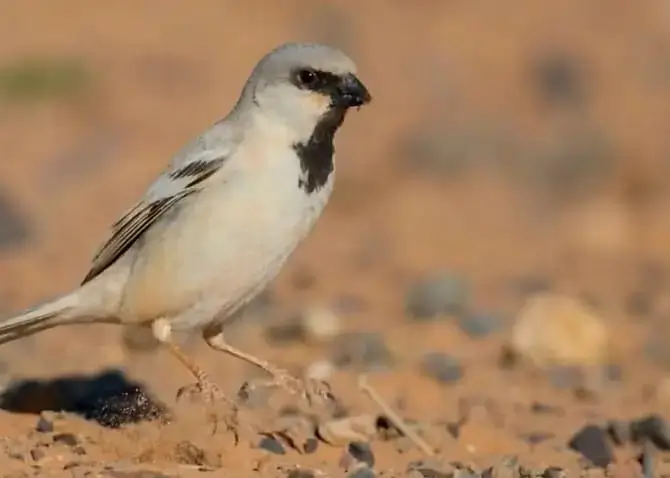
The Desert Sparrow is a small, slender bird with sandy-brown plumage that blends seamlessly with its desert surroundings. Males typically display a slightly darker crown and subtle gray markings around the face, while females are paler and more uniformly colored.
Key identification features:
- Sandy-brown upperparts with faint streaking
- Pale underparts
- Short, conical bill adapted for seed-eating
- Subtle but melodic calls used for communication between mates and family groups
This species is often seen in pairs or small family groups, especially around areas with sparse vegetation, wadis, or dry riverbeds.
Habitat and Distribution in Morocco
The Desert Sparrow inhabits arid and semi-arid regions, including desert plains, rocky slopes, and agricultural oases. In Morocco, it is most commonly observed in the Sahara fringe, the southern Anti-Atlas, and sparsely vegetated areas near Merzouga and the Erg Chebbi dunes.
The species is highly adaptable and can thrive in small oases and even near human settlements in desert regions, making it easier to observe than some other desert-adapted birds.
For desert birdwatching itineraries, check our Birding Day Trips.
Behavior and Diet
Desert Sparrows are primarily seed-eaters, feeding on small desert grasses, shrubs, and grains cultivated near oasis farms. Occasionally, they also feed on insects during the breeding season to supplement their diet.
They are social birds, often forming small flocks outside the breeding season. Males can be observed performing subtle courtship displays, including song bouts and tail flicking, to attract females.
Breeding and Nesting
Breeding typically occurs during the spring and early summer, coinciding with periods when desert vegetation is slightly greener. Desert Sparrows build nest cavities in bushes, small trees, or even in walls near human settlements, demonstrating their remarkable adaptability to desert life.
Clutches generally contain 3–5 eggs, incubated by the female for around two weeks. Both parents participate in feeding the chicks, ensuring high survival rates even in harsh conditions.
Birdwatching Tips for Observing Desert Sparrow
- Best time to visit: Spring (March–May) and early summer, when breeding activity is at its peak.
- Optimal habitats: Look in desert scrub, wadis, oases, and near human settlements in arid regions.
- Behavior to watch for: Small family groups, foraging on seeds, and males singing during breeding season.
- Photography tips: Use a zoom lens to capture close-up shots, especially around bushes or low trees where they nest.
For guided trips to see desert species like the Desert Sparrow, explore our birding-day-trip in the Merzouga Desert and surrounding areas.
Conservation Status
The Desert Sparrow is currently not considered globally threatened, thanks to its wide distribution across North African deserts. However, local populations may face habitat pressure from agricultural expansion, water scarcity, and desertification. Birdwatchers are encouraged to observe responsibly, avoiding nesting sites during the breeding season.
Conclusion
The Desert Sparrow is a true desert specialist, perfectly adapted to Morocco’s arid landscapes. From its subtle plumage to its fascinating behavior, it is a rewarding species for birders exploring southern Morocco. Observing the Desert Sparrow provides insight into how birds thrive in harsh environments and highlights the rich biodiversity of Morocco’s deserts.
To discover more species and plan your birdwatching adventures, explore our Bird Watching Tours page and check out our birding-day-trips.