
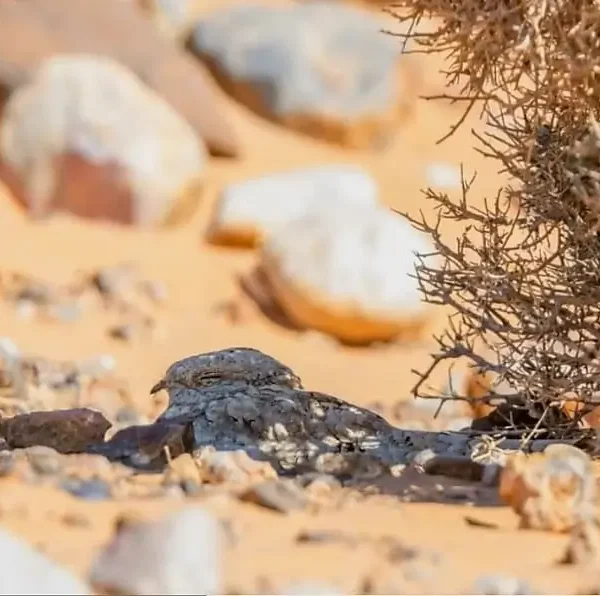
Egyptian Nightjar (Caprimulgus aegyptius) is one of the most elusive and fascinating nocturnal birds found in Morocco. Quiet, cryptically camouflaged, and active mainly after sunset, this desert specialist is a dream species for many birdwatchers. Morocco’s vast arid landscapes ranging from gravel plains to oasis systems provide some of the best opportunities anywhere in the Western Palearctic to observe this rare nightjar.
Below is a detailed guide on what makes this species unique, the best places to find it in Morocco, and the ideal time of year to increase your chances of a successful sighting.
What Makes the Egyptian Nightjar Unique? (Identification, Behavior & Ecology)
The Egyptian Nightjar belongs to the family Caprimulgidae, a group of nocturnal, insectivorous birds adapted to life in open, arid environments. Compared with other nightjars in Morocco such as the European Nightjar (Caprimulgus europaeus) or the Golden Nightjar (Caprimulgus eximius)—the Egyptian Nightjar is paler, quieter, and even more specialized for desert living.
Identification Features
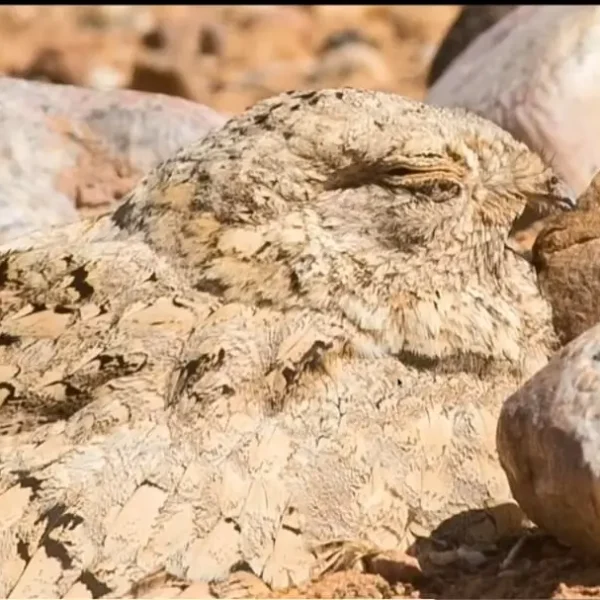
- Pale sandy-grey plumage, blending perfectly with desert gravel and sandy substrates
- Slim profile and relatively long wings
- Large dark eyes adapted for low-light hunting
- Short, weak call compared with other nightjar species
- Low, silent, buoyant flight style at dusk and night
Its cryptic plumage allows it to roost motionless on the ground during the day, where it becomes nearly impossible to detect. Even at close range, the bird’s camouflage makes it resemble a rock or a patch of sand.
Behavior and Ecology
Egyptian Nightjars are primarily nocturnal insectivores, feeding on moths, beetles, and other flying insects. They become active shortly after sunset, often flying low over open ground. During the breeding season, they lay their eggs directly on bare ground with no nest structure, relying entirely on camouflage for protection.
This species favors warm, dry environments, including:
- Gravel deserts
- Sandy plains
- Dry wadis
- Tamarisk stands near oases
These habitats are widely distributed across Morocco’s southern and eastern regions, making the country one of the best places to observe the species.
Where to Find the Egyptian Nightjar in Morocco (Top Birding Locations)
Morocco hosts some of the most reliable sites for Egyptian Nightjar in the Western Palearctic. Although the species can be challenging to find, the following regions are known for regular sightings:
1. Merzouga Desert & Erg Chebbi
One of the most famous locations for nightjars. The combination of open gravel plains, scattered vegetation, and adjacent dunes creates ideal roosting and feeding grounds. Evening surveys along desert tracks often yield sightings.
2. Tagdilt Track (Boumalne Dades)
This high desert plateau is known for its rich birdlife. Egyptian Nightjars are sometimes observed at dusk along the stony plains and dry riverbeds surrounding the area.
3. Draa Valley & Zagora Region
With its mix of palm groves, wadis, and stony desert, the Draa region offers excellent habitat. Nightjars may be found roosting near tamarisk stands or foraging at night along open tracks.
4. Ouarzazate Region
The semi-desert plains around Ouarzazate and Skoura can host the species, especially in spring and early summer.
5. Souss-Massa Region
While less commonly associated with nightjars, the arid zones deeper inland from the coast, particularly near Guelmim and the Western Sahara transition zone, provide suitable habitat.
6. Western Sahara & Southern Morocco
These expansive deserts, including areas near Guelmim, Tan-Tan, and further south, offer some of the most extensive Egyptian Nightjar habitat in the country.
When searching for the species, pay close attention to:
- Dry wadis with scattered low vegetation
- Quiet dirt tracks
- Open desert plains with minimal disturbance
Patience is key, as these birds rely on stillness and camouflage to avoid detection.
Discover the Avian Wonders of the Merzouga Desert!
Best Time to See the Egyptian Nightjar (Seasonality & Birdwatching Tips)
Seasonality
Egyptian Nightjars are mainly present in Morocco during the spring and summer months, especially from:
- March to July for breeding
- Late July to September for post-breeding dispersal
Some individuals may remain later into the autumn depending on conditions, but sightings are most reliable in late spring and early summer.
Best Time of Day
- Dusk: The most productive time, as nightjars begin to fly and vocalize
- Night: Low spotlighting with a red or dim beam can reveal foraging birds
- Pre-dawn: Another active period before they settle to roost
Birdwatching Tips for Nightjars
- Use low-intensity red light to avoid disturbing the birds
- Walk slowly or drive gently along quiet desert tracks
- Listen for soft calls or watch for the characteristic silent, buoyant flight
- Avoid approaching roosting birds too closely to prevent disturbance
- Scan open ground for their distinctive body shape when roosting
Nightjars are sensitive to disturbance, especially during the breeding season, so it’s important to observe them responsibly and from a respectful distance.
Conclusion
The Egyptian Nightjar is one of Morocco’s most intriguing nocturnal birds, perfectly adapted to life in the desert. With its camouflaged plumage, silent flight, and secretive behavior, it offers a rewarding challenge to birdwatchers. By visiting the right habitats, at the right times of year, and with patient observation, Morocco provides exceptional opportunities to encounter this rare and mysterious species.